
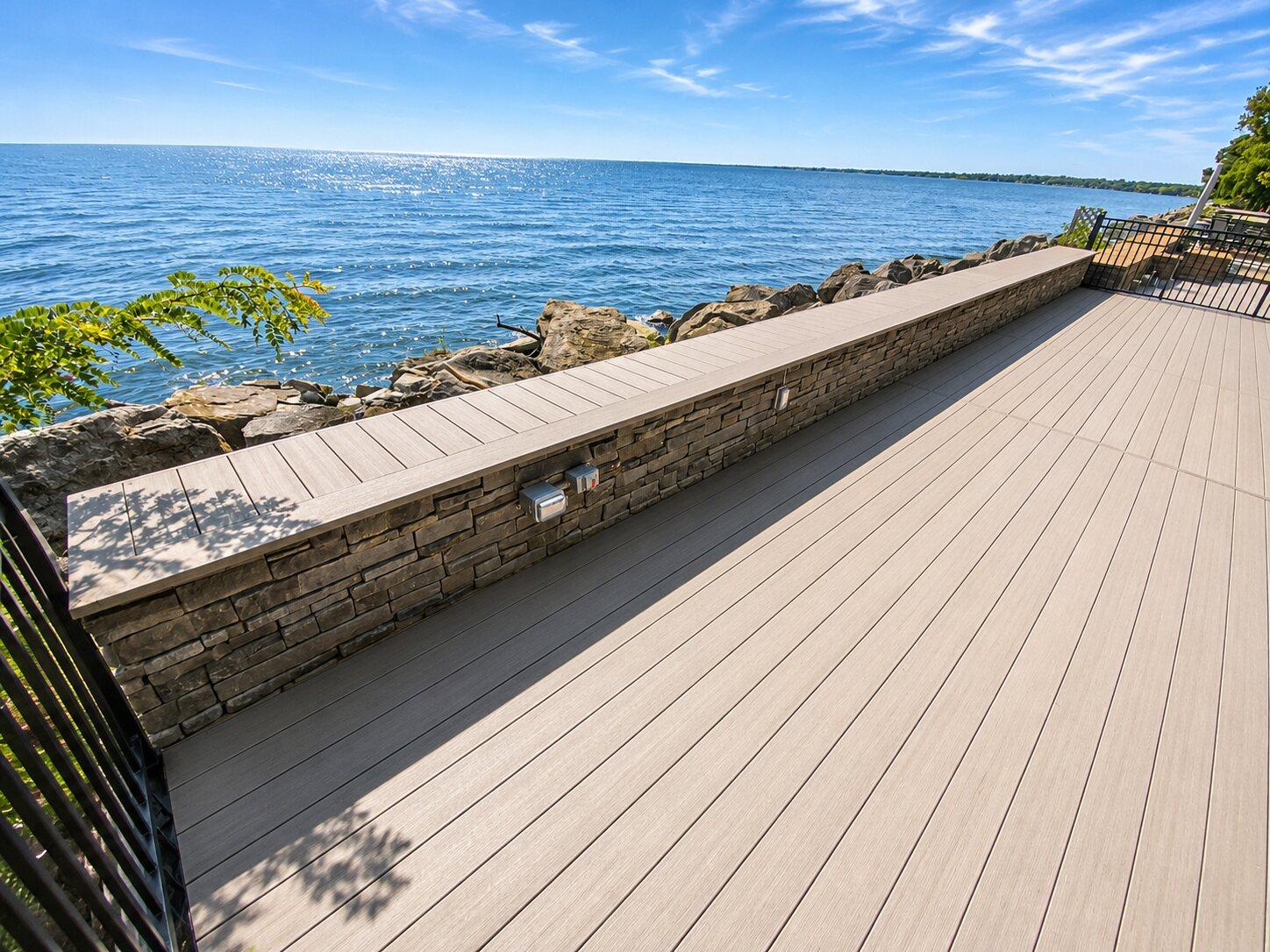
Composite decking, cedar and pressure-treated wood can all make a good deck. The difference is in how each one handles the weather, how much care it asks for every year, and how it looks after ten summers. In Essex County, with humid summers, wet springs and falls, and winters that freeze and thaw over and over, those differences show up faster than they do in a milder climate.
This guide compares the three decking materials on the questions homeowners ask most, so you can choose the one that suits how you use your deck and how much time you want to spend on it.
The three materials in one paragraph each
Composite decking is made from wood fibres and plastic, and the boards sold today are capped: wrapped in a tough polymer shell that resists stains, fading and moisture. It does not need staining and it does not splinter. It comes in a range of colours, many with a wood-grain texture.
Cedar is a softwood with natural oils that help it resist rot and insects. It is light, it smells like wood, and it weathers to a silver grey if it is left alone, or keeps its warm colour with a stain every few years.
Pressure-treated wood is softwood, usually pine, treated under pressure with a preservative so it can stand up to the ground and the weather. It is the standard material for the frame under almost every deck, including composite decks, and it can also be used for the boards on top.
How each one handles Essex County weather
Moisture is what ages a deck in this part of Ontario. Wood takes in water when it rains and lets it out when the sun comes back, and every cycle opens small checks and cracks in the surface. In winter, water that has soaked into a board freezes and expands, which is where splitting and raised grain come from. A wood deck that is kept sealed holds up well; one that is left a few seasons without stain ages quickly.
Capped composite takes in very little water, so freeze-thaw cycles have much less to work on. It stays the same colour through the seasons, apart from a slight lightening in its first months of sun, and it does not check or split.
Heat is the trade-off. Composite boards get warmer than wood in full afternoon sun, and darker colours get warmer than light ones. On a south or west-facing deck without shade, a lighter composite colour or a pergola over part of the deck makes a real difference for bare feet.
On the lake, decks take more wind, spray and sun than in a sheltered backyard, and fastening and spacing matter even more. One homeowner on the water wrote that the decks GS Construction built for them feel solid and secure, with steps that are firm and stable.
Upkeep, year by year
A composite deck asks for a wash in the spring with a soft brush and a mild soap, to clear pollen and the leaves that collect between boards. In winter, a plastic shovel clears snow without marking the surface. That is most of the routine.
A wood deck asks for more. Cedar and pressure-treated boards look their best with a fresh coat of stain or sealer every two to three years, after a cleaning and sometimes a light sanding. Boards that cup or split, and nails or screws that work their way up, get replaced or reset along the way.
Many homeowners enjoy that routine, and a freshly stained cedar deck is hard to beat. The honest question to ask is whether you will do it every few years, because the deck that gets its stain on schedule is the one that lasts.
How long each one lasts
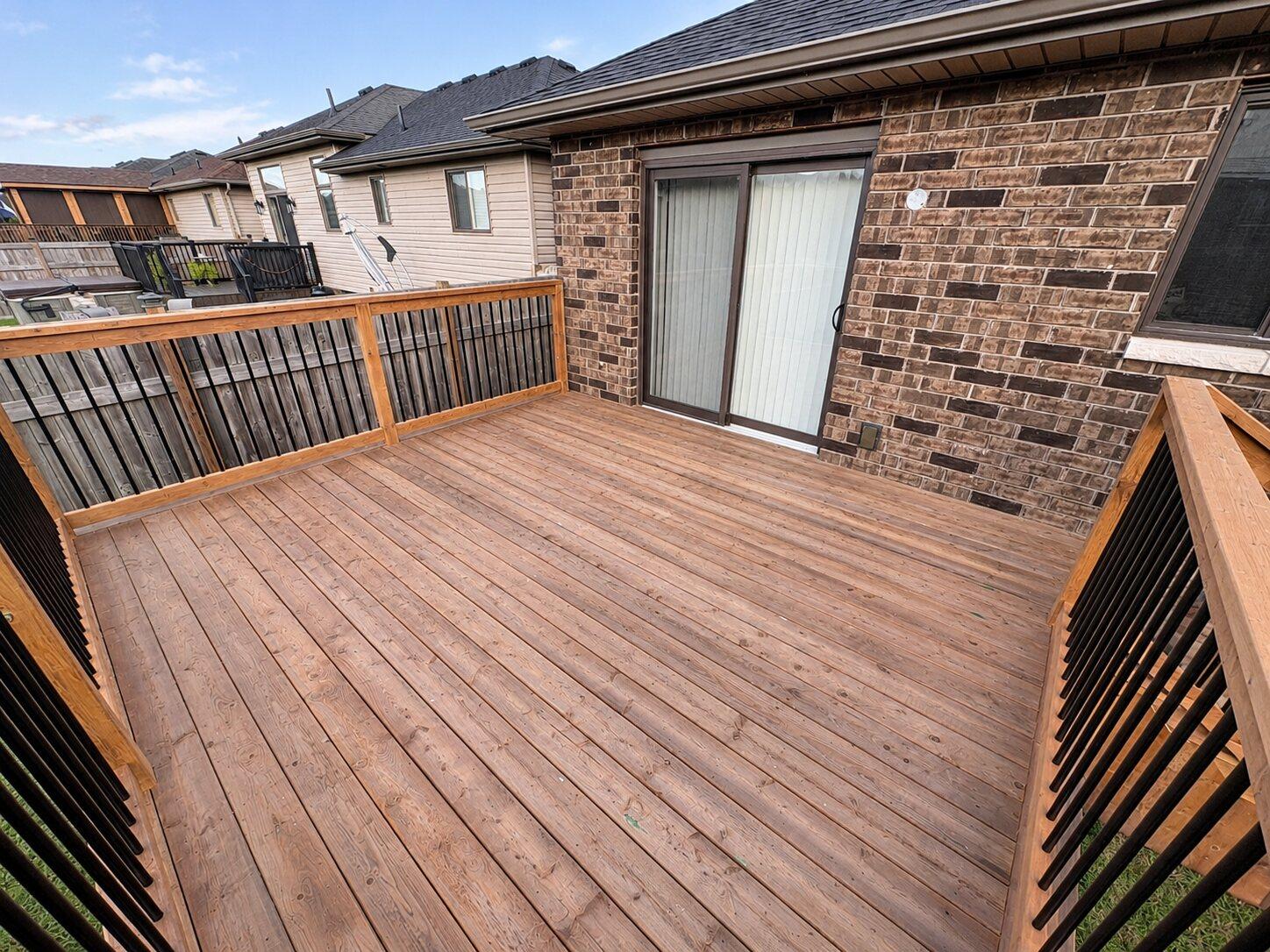
With regular staining, a pressure-treated deck surface commonly lasts in the range of ten to fifteen years in a climate like ours, and cedar somewhat longer. Without upkeep, both age faster.
Capped composite boards are made to last longer, and the major brands back their boards with material warranties against fading and staining that run for decades. Those warranties cover the boards themselves; how the deck is built underneath decides whether the structure lasts as long.
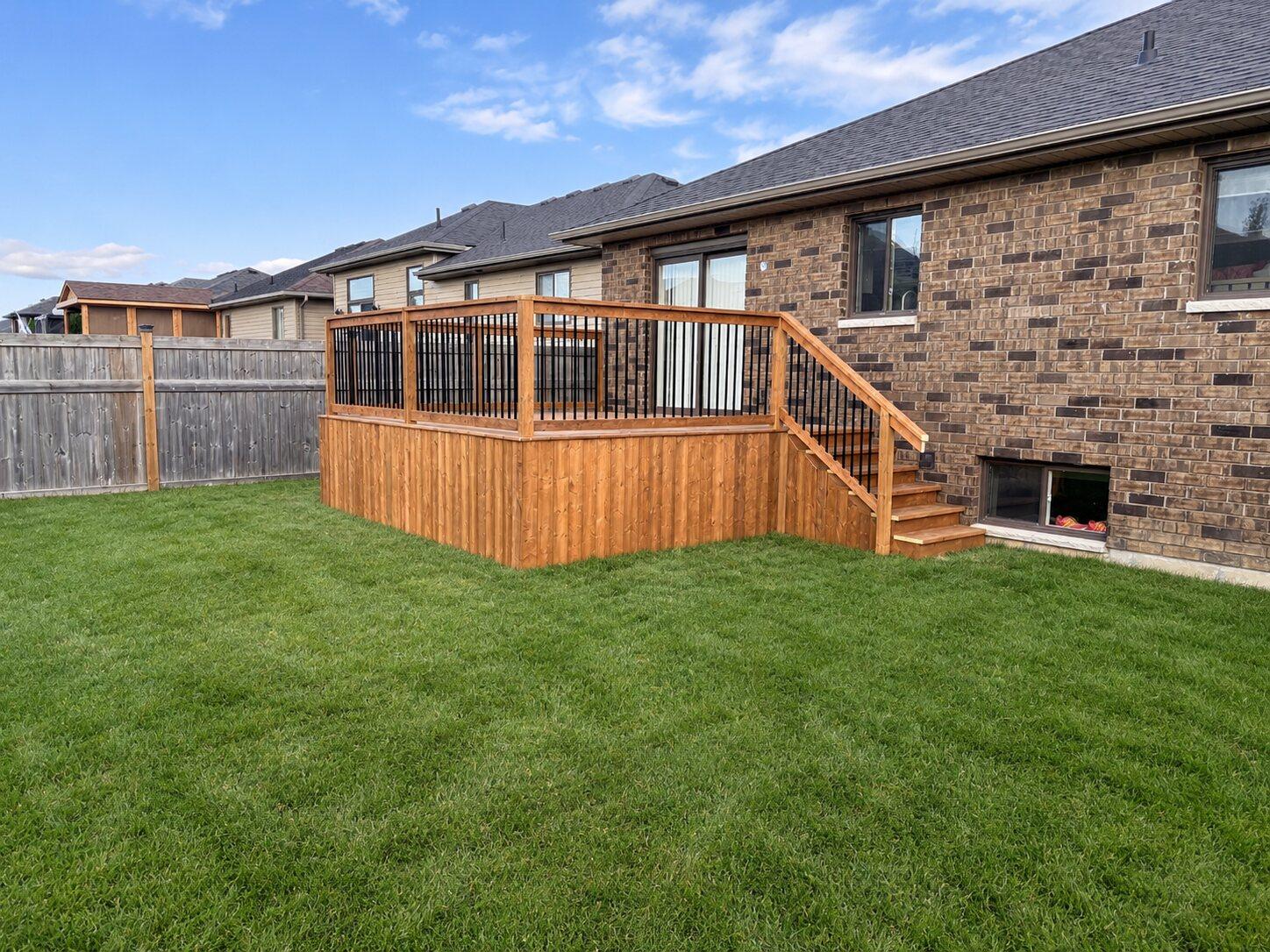
Whatever the boards are made of, the frame is almost always pressure-treated wood. Footings set below the frost line, joists sized and spaced for the material on top, and a ledger properly fastened and flashed against the house are what keep any deck level and solid over the years. GS Construction backs its decks with a 10-year warranty on the work.
Look and feel underfoot
Real wood has a warmth that many people want: the grain, the smell, the way it weathers. Cedar in particular has a colour that composite imitates but does not quite match up close. Wood can also be stained a new colour years later, which composite cannot.
Composite looks the same on the last day of summer as on the first. Modern boards have a convincing wood-grain texture, and hidden fasteners leave the surface free of screw heads. It never splinters, which matters on a deck where children and dogs spend the summer barefoot.
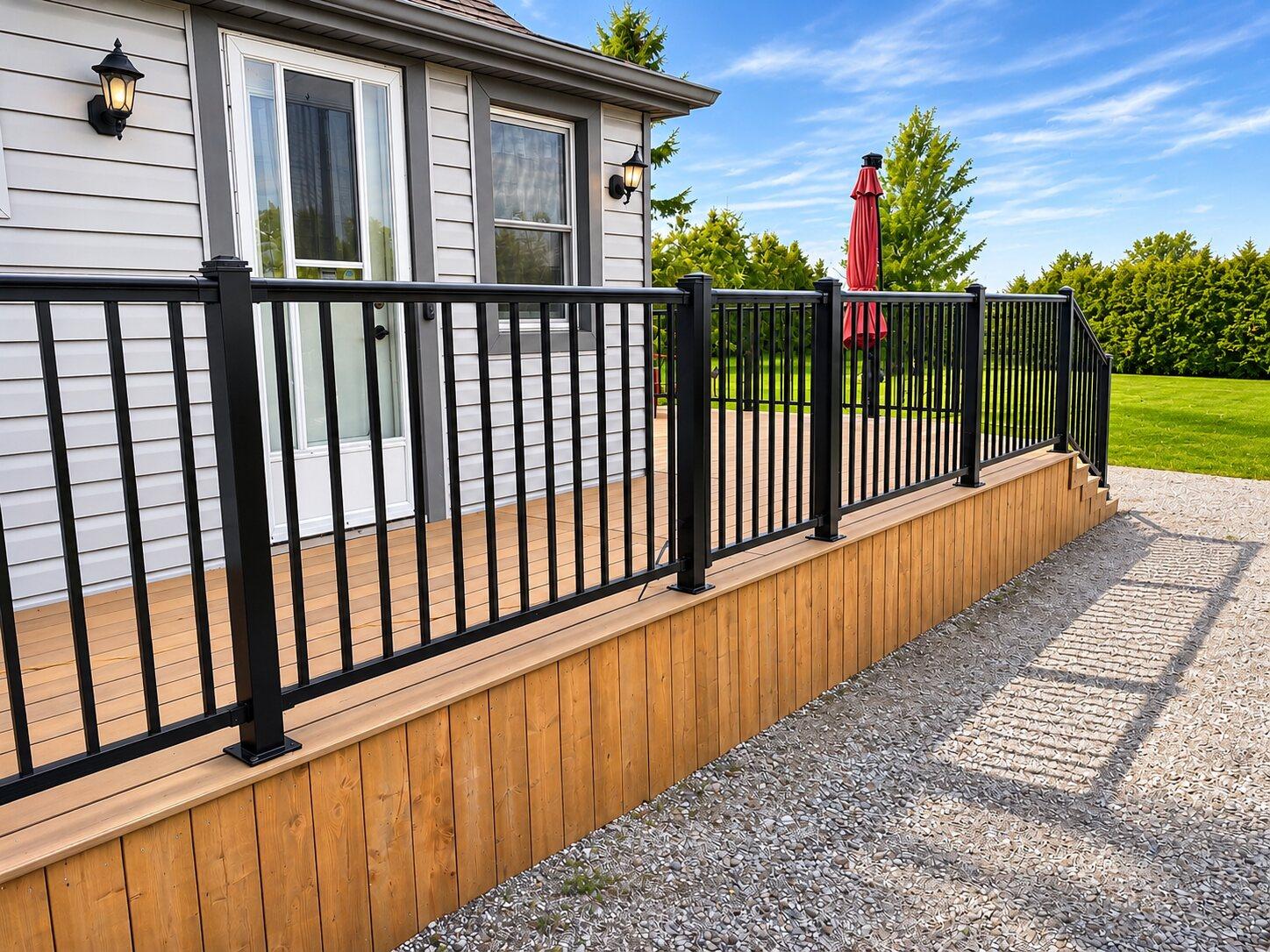
Railings follow the same logic. Aluminum and glass railings need almost no upkeep and keep the view open; wood railings match a wood deck and can be stained with it.
Building with composite: what changes in the frame
Composite boards bend more than wood between supports, so they need joists closer together, and closer still when the boards run on a diagonal. A composite deck built on a frame spaced for wood will feel soft underfoot, even though the boards themselves are fine.
Composite also expands and contracts with temperature along its length, so the gaps at the ends of the boards and the fastening system follow the manufacturer's instructions. These are details the homeowner never sees, and they decide whether a composite deck stays flat and tight for its whole life.
Which one should you choose?
Choose composite if you want a deck that looks the same year after year with little more than a spring wash, if the deck gets heavy use from children or pets, or if you would rather spend summer weekends on the deck than working on it.
Choose cedar if you want the look and feel of real wood and you are happy to stain it every few years. Choose pressure-treated wood for a practical, solid deck that you plan to keep sealed, or for structures such as a frame, stairs and skirting where the boards on top are composite.
Many decks mix the two: a composite surface with aluminum railings on a pressure-treated frame is one of the most common combinations. One homeowner described the L-shaped deck GS Construction built for them, with composite boards and aluminum railings, as very solid, with the quality of workmanship apparent in every step.
Planning a deck in Kingsville, Leamington, Essex or Harrow
GS Construction builds composite, cedar and pressure-treated decks across Kingsville, Leamington, Essex and Harrow. A new deck takes about a week, decks carry a 10-year warranty on the work, and the company is fully insured and covered by WSIB.
To plan yours, call (226) 202-1022 or send the form below, and we will come and look at the yard with you.